Databases of Control: Engaging with the Library Collection
What is accessible and to whom? What gets collected, indexed, and preserved, and what disappears? And, most importantly, who has the power to decide these questions? This course treats databases as infrastructures of control that shape our everyday lives: they decide whether we can vote, cross borders, or even whether we are surveilled by a government agency. Records, however, are not objective documentation. They are the result of collection processes that mirror long histories of governmental control and repression. Working through theoretical texts and cinematic case studies from German-speaking and transnational contexts, we will examine how seemingly mundane tools of record-keeping exert power over our lives.
The course will involve a collaboration with Debra Bucher, Head of Collections & Discovery, to approach the Vassar Library’s holdings as a database, a system of classification shaped by institutional decision-making. Together we will examine how bias enters collections and how libraries have responded to the legacies of racism and systemic marginalization. The final project will be a video essay in which students apply the course’s critical framework to analyze a database that has a direct bearing on their lives. Readings and discussion in English.
What is accessible and to whom? What gets collected, indexed, and preserved, and what disappears? And, most importantly, who has the power to decide these questions? This course treats databases as infrastructures of control that shape our everyday lives: they decide whether we can vote, cross borders, or even whether we are surveilled by a government agency. Records, however, are not objective documentation. They are the result of collection processes that mirror long histories of governmental control and repression. Working through theoretical texts and cinematic case studies from German-speaking and transnational contexts, we will examine how seemingly mundane tools of record-keeping exert power over our lives.
The course will involve a collaboration with Debra Bucher, Head of Collections & Discovery, to approach the Vassar Library’s holdings as a database, a system of classification shaped by institutional decision-making. Together we will examine how bias enters collections and how libraries have responded to the legacies of racism and systemic marginalization. The final project will be a video essay in which students apply the course’s critical framework to analyze a database that has a direct bearing on their lives. Readings and discussion in English.
- Instructor: Anna Mayer
- Instructor: Aleyna Kilicaslan
- Instructor: Anna Mayer
- Instructor: Elliott Schreiber
- Instructor: Silke von der Emde

- Instructor: Anna Mayer
- Instructor: Elliott Schreiber

German/Film 265, Spring 2026: German Cinema Behind the Wall
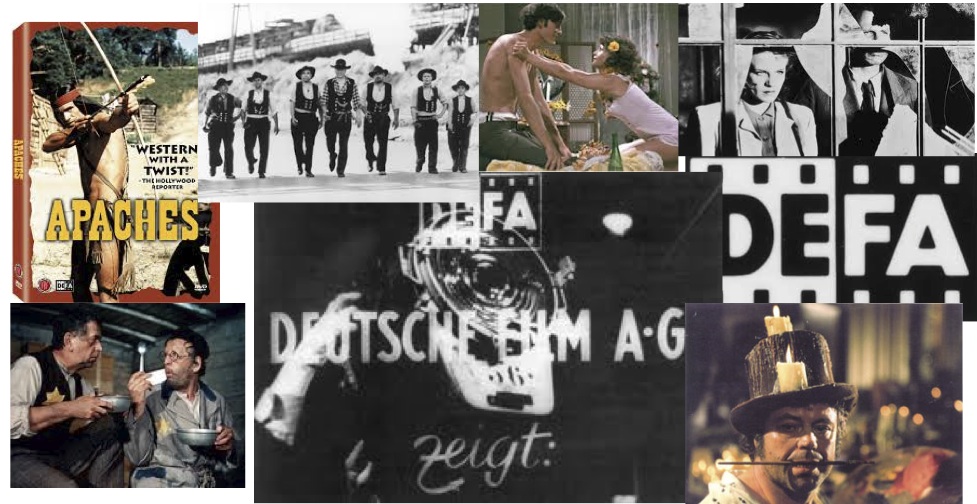
Three decades after the fall of the Berlin Wall, films from and about the former GDR are finally becoming available to audiences, students, and researchers in the U.S. DEFA (the state-owend film company) produced over 750 feature films and countless documentaries between 1946-1990. Although fourteen of these featured in a recent list of the hundred best films of all time, few who did not grow up in the former GDR are familiar with more than a handful of them. In fact, East German film culture had remained terra incognita for the Western public during the existence of the GDR. This course examines the successes and failures of some DEFA films as they aspired to be a national cinema in their own right. We will analyze this significant segment of German film history in relation to the development of New (West) German Cinema and think about the exact "placing" of GDR cinema within German film history and international debates around national cinema.
The course is divided into six parts: we will begin with a body of anti-fascist films produced in the GDR. The analysis of these films will help us grasp motivations and political convictions of many East German directors, such as Wolfgang Staudte, Frank Beyer, and Konrad Wolf. The "forbidden films" from 1965/66, which until 1990 had never been seen, show how advanced East German film was already in the early sixties. The analysis of GDR Westerns, as well as the popular musical film Hot Summer, will help us understand the way popular culture worked in East Germany. Analyzing the role of women in DEFA will give us insight into the difference between theoretical emancipation and equality in the GDR. A number of documentary films will give students a glimpse at everyday life in East Germany. Finally, we will talk about Wende films and the legacies of GDR film.
In addition to examining the films within the larger socio-historical context in Germany, we will talk about the fundamentals of film analysis and contemporary film criticism. By the end of the course, students should be able both to do a "close reading" of a film and to place it within the larger historical context defined by the aesthetic and political debates in German society to which the films respond.
Three decades after the fall of the Berlin Wall, films from and about the former GDR are finally becoming available to audiences, students, and researchers in the U.S. DEFA (the state-owend film company) produced over 750 feature films and countless documentaries between 1946-1990. Although fourteen of these featured in a recent list of the hundred best films of all time, few who did not grow up in the former GDR are familiar with more than a handful of them. In fact, East German film culture had remained terra incognita for the Western public during the existence of the GDR. This course examines the successes and failures of some DEFA films as they aspired to be a national cinema in their own right. We will analyze this significant segment of German film history in relation to the development of New (West) German Cinema and think about the exact "placing" of GDR cinema within German film history and international debates around national cinema.
The course is divided into six parts: we will begin with a body of anti-fascist films produced in the GDR. The analysis of these films will help us grasp motivations and political convictions of many East German directors, such as Wolfgang Staudte, Frank Beyer, and Konrad Wolf. The "forbidden films" from 1965/66, which until 1990 had never been seen, show how advanced East German film was already in the early sixties. The analysis of GDR Westerns, as well as the popular musical film Hot Summer, will help us understand the way popular culture worked in East Germany. Analyzing the role of women in DEFA will give us insight into the difference between theoretical emancipation and equality in the GDR. A number of documentary films will give students a glimpse at everyday life in East Germany. Finally, we will talk about Wende films and the legacies of GDR film.
In addition to examining the films within the larger socio-historical context in Germany, we will talk about the fundamentals of film analysis and contemporary film criticism. By the end of the course, students should be able both to do a "close reading" of a film and to place it within the larger historical context defined by the aesthetic and political debates in German society to which the films respond.
- Instructor: Silke von der Emde
- Instructor: Karolina Naidon
- Instructor: Elliott Schreiber
- Instructor: Silke von der Emde